National Citizens Coalition Statement on the Liberal Budget
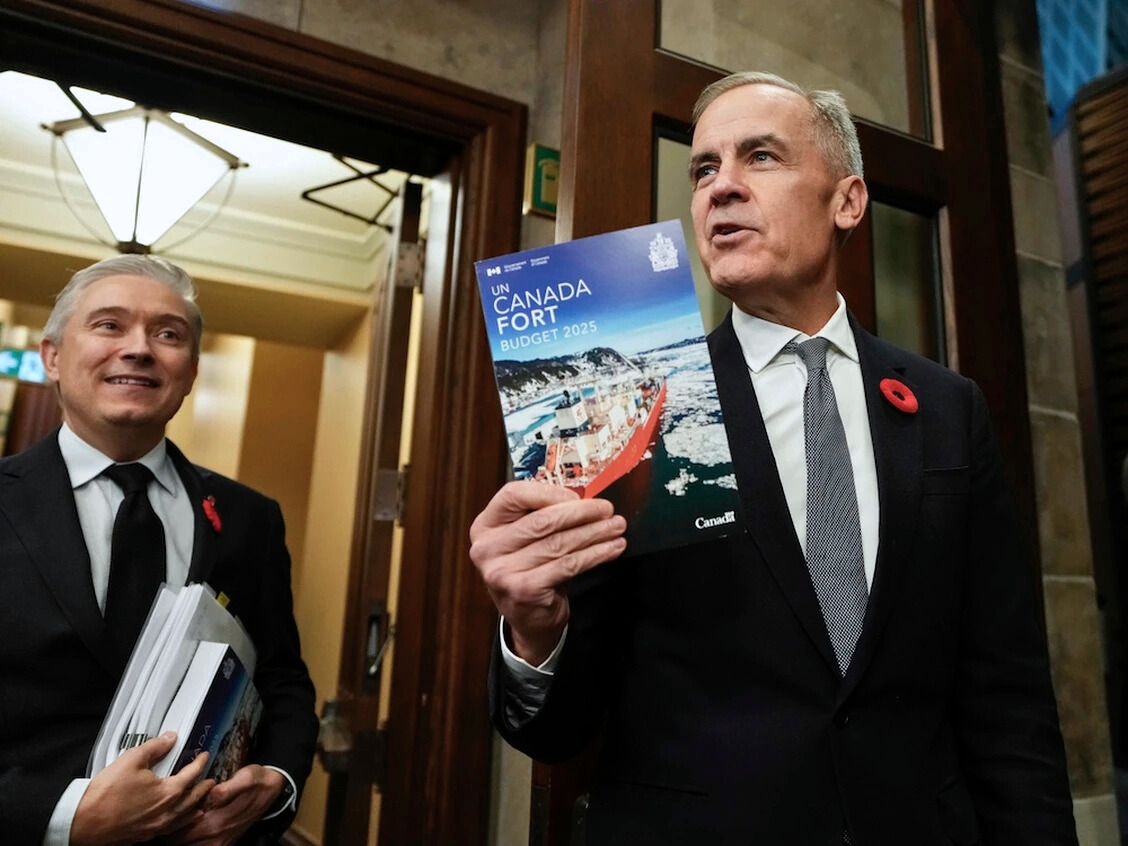
Toronto, ON – November 5, 2025 – Peter Coleman, President of the National Citizens Coalition, issued the following statement in response to the Liberal government's latest budget:
"While the Liberal budget includes a few targeted measures that deserve recognition -- such as increased defence spending, investments in infrastructure, and aggressive tax incentives like 100% write-offs for major projects including Ring of Fire developments, which could attract international investors by outpacing similar offerings in the U.S. and Europe -- this document falls far short of the transformative vision Canadians were promised. Instead, it reads like a traditional Trudeau-Liberal budget: heavy on spending, heavy on government control, light on fiscal discipline, and devoid of bold strategies to drive real economic growth or affordability for everyday families.
Let's start with the numbers, which paint a troubling picture of fiscal irresponsibility. The budget projects annual deficits starting at $78 billion in 2025-2026 and only modestly declining to $57 billion by 2029-2030 -- the highest deficit on record for a non-pandemic year. There's no credible plan to ever return to balanced budgets, resulting in an additional $320 billion piled onto our national debt over the coming years. That's a millstone for the young and working-aged generations who were poorly served by the budget's housing section, described as a "disaster" by industry experts and insiders, and that seeks to build only social housing and purpose-built rentals on a scale far smaller than promised, with limited changes to high development costs for builders and developers.
This escalating debt will drive interest costs skyward, positioning it as one of the top three expense lines in the federal budget. For context, as of August 2025, the four largest federal budget expenses provide a stark warning: social security at $1.46 trillion, health at $991 billion, and both net interest on debt and national defense at $874 billion each. In Canada, we're on a trajectory where interest expenses could approach $1 trillion annually -- an insane burden that siphons funds away from essential programs, growth initiatives, and measures that could truly help average Canadians or lure foreign investment.
This budget adds $176 billion in new spending over five years, offset by a mere $60 billion in potential cost savings that are vague and unlikely to fully materialize. Promised cuts, such as a 10% reduction in the public sector workforce over five years, sound modest but still leave staffing levels well above pre-pandemic norms. Meanwhile, the deficit projection has ballooned from an initial $43 billion to $76 billion, underscoring a pattern of overpromising and underdelivering.
Economic growth forecasts hover around a dismal 1% per year, far too low to generate the revenue needed to rein in these deficits without painful tax hikes or further borrowing. Absent are any meaningful affordability measures to ease the cost-of-living crunch hitting Canadian households and our shrinking middle class. Compounding these issues is the continued favoritism toward legacy media, with an additional $150 million for the CBC and $127 million for the media fund -- further entrenching a system where taxpayer dollars prop up outlets that too often align with government narratives.
Conservatives should approach this moment strategically: celebrate the few genuine wins, like the extension of net-zero targets from 2030 to 2050, which provides breathing room for realistic energy transitions. But they must also differentiate themselves by pushing for results on key issues, such as eliminating or scaling back the industrial carbon tax to boost competitiveness.
Broaden the voices in the party engaging with media -- beyond just Pierre Poilievre -- to hammer home the budget's glaring omissions: no real affordability relief and no serious growth strategies. There's wisdom in patience here, particularly under threat of additional floor-crossers. The public is not wishing for an election right now; let's continue to dominate on the policy front and drag the Liberals back towards the centre, and wait and see how 2026 unfolds.
By next year, it will become clear that Mark Carney's campaign promises were little more than electioneering -- evidenced already by the lack of progress on a new U.S. trade deal, especially with CUSMA up for renegotiation. Carney's popularity will wane as his policies are exposed as insufficient, though we can hope some elements unexpectedly deliver improvements.
In the meantime, keep calm and carry on. Canadians deserve a government focused on fiscal prudence, innovation, opportunity, and a return to social cohesion, self-respect, and a respect for our history -- not more debt-fueled spending sprees and virtue-signalling nonsense.
The National Citizens Coalition will continue reaching millions of Canadians per month, while advocating for small-c policies that put taxpayers and working Canadians first.
Sincerely,
Peter Coleman
President, National Citizens Coalition
About the National Citizens Coalition: Founded in 1967, the NCC is Canada's pioneering voice for freedom, limited government, and individual responsibility. We fight for lower taxes, less waste, and more accountability in Ottawa.
Peter Coleman is available for comment: [email protected]
-30-