Paying more at the pump? Another pipeline would help with that
Why Canada, and not unstable countries like Iran, should supply stable, secure, and democratically-based oil to the world, and Canadian consumers.
By Geoff Russ
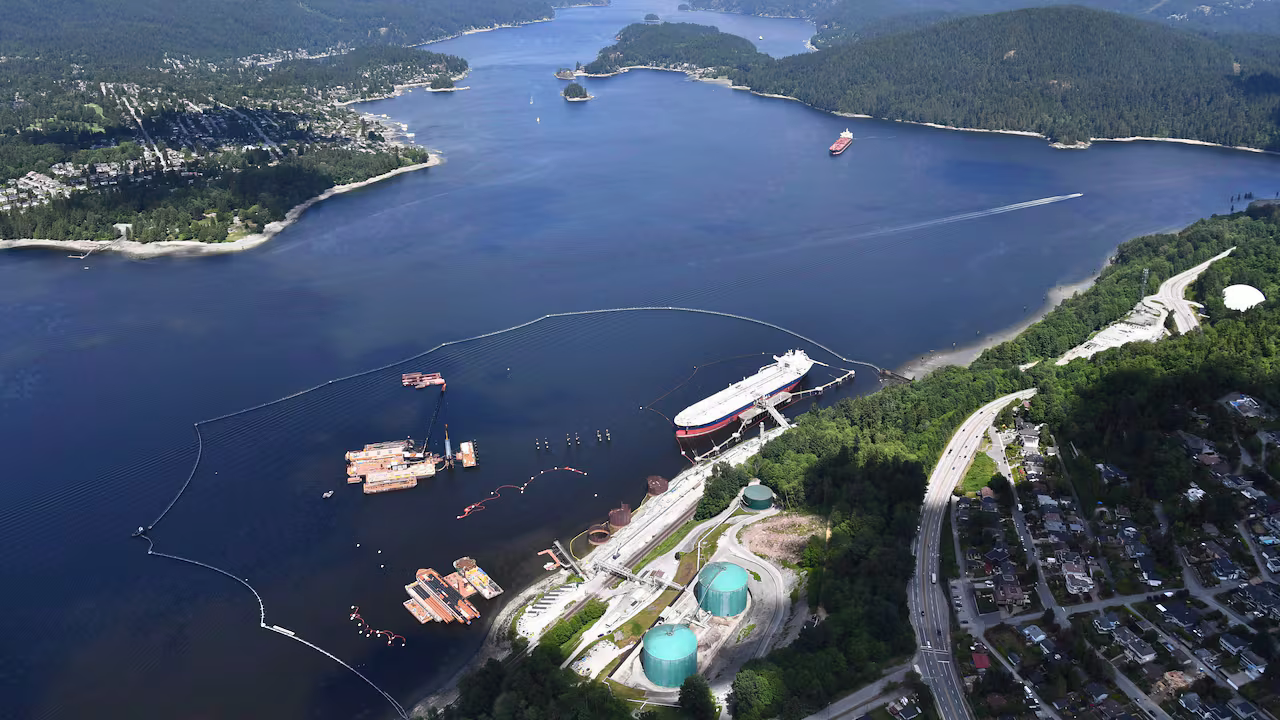
As Iran war-driven oil shocks push gas prices higher again, but particularly in areas like the B.C. Lower Mainland, British Columbia is getting a fresh reminder that geography and infrastructure are crucial to their well-being.
Metro Vancouver motorists woke up last week to prices around $1.80 to $1.90 a litre, as crude surged amid the conflict involving Iran, and continued threats to shipping through the Strait of Hormuz.
Werner Antweiler, an economist at the University of British Columbia, told the Vancouver Sun that each US $1 increase in crude can add about 1.4 cents per litre in B.C. If oil were to rise another US $30 a barrel, that could mean roughly 40 cents more at the pump. Dan McTeague, president of Canadians for Affordable Energy, has said the region could be pushed back into the $2-a-litre range.
None of this is new for B.C. consumers. For years, the Lower Mainland paid some of the highest fuel prices in Canada because the region does not refine nearly enough fuel for its own needs and has long relied on constrained supply routes.
That problem was laid out in detail by economist G. Kent Fellows in a 2024 C.D. Howe Institute paper. He argued that B.C.’s gasoline-price premium since 2015 was driven primarily by insufficient Trans Mountain pipeline capacity for refined products, not by collusion.
Fellows estimated the bottleneck had been adding more than 10 cents a litre to Lower Mainland wholesale prices since 2019, and between 20 and 30 cents a litre in 2023. He put the annual burden at about $500 per person, roughly $1,200 per household, or $1.5 billion a year across the Lower Mainland.
The relief that arrived in 2024 when the Trans Mountain expansion entered service on May 1, boosting capacity to 890,000 barrels per day. Fellows said wholesale gasoline prices in Vancouver fell by about 28 cents per litre after the expansion came online.
Vancouver pump prices, which had climbed above $2.35 a litre in spring 2024, had fallen to roughly $1.58 by early October, though some of that decline also reflected refineries returning from seasonal maintenance. TMX reduces reliance on more expensive rail shipments and ease costs in one of Canada’s priciest fuel markets.
By July 2025, Metro Vancouver motorists were still paying high prices by national standards, but far less than in previous summers. Narrowing rack-price spreads between Vancouver and Edmonton and the expanded pipeline were key reasons, along with lower oil prices and the removal of the consumer carbon tax. The B.C. Utilities Commission also found retailers had not simply pocketed the carbon-tax savings.
That matters now, because a region with better supply options is better able to absorb a global shock. Trans Mountain did not insulate B.C. from war-driven crude spikes this time around. However, it helped reduce the structural premium that had made every shock worse.
If one pipeline expansion could materially narrow the Lower Mainland’s fuel disadvantage, another export line to the coast would further strengthen domestic supply resilience, create construction work, and give Canada greater reach into overseas markets.
There is also a broader strategic point. When global energy markets are rattled by instability in places such as Iran, the world needs greater supplies from democratic, rule-of-law producers. Canada is a far more reliable supplier than authoritarian states that can throw shipping lanes and oil markets into chaos.
For B.C. drivers, more secure supply means smaller premiums, less exposure to bottlenecks, and a better chance of withstanding the next crisis. The Lower Mainland has already seen what added pipeline capacity can do. It would be a mistake not to learn from it.
Geoff Russ is a policy manager in the resource sector and contributor to several national publications across Canada, the United States, and Australia. Read his work in Without Diminishment, the National Post, the Spectator Australia, and Modern Age.
There's no solving for Canada's cost of living crisis -- or tariff crisis -- without growing Canada's resource economy, and restrictions on our energy sector have proven themselves to be just another tax on working families. Help us advocate on your behalf, and on behalf of our Great Canadian energy producers and innovators.
SIGN your name to support the NCC's Energy Affordability Now campaign, or chip in with a generous donation.